High-Resolution Manometry
High-Resolution Manometry (HRM) in Rewa
What Is High-Resolution Manometry (HRM)?
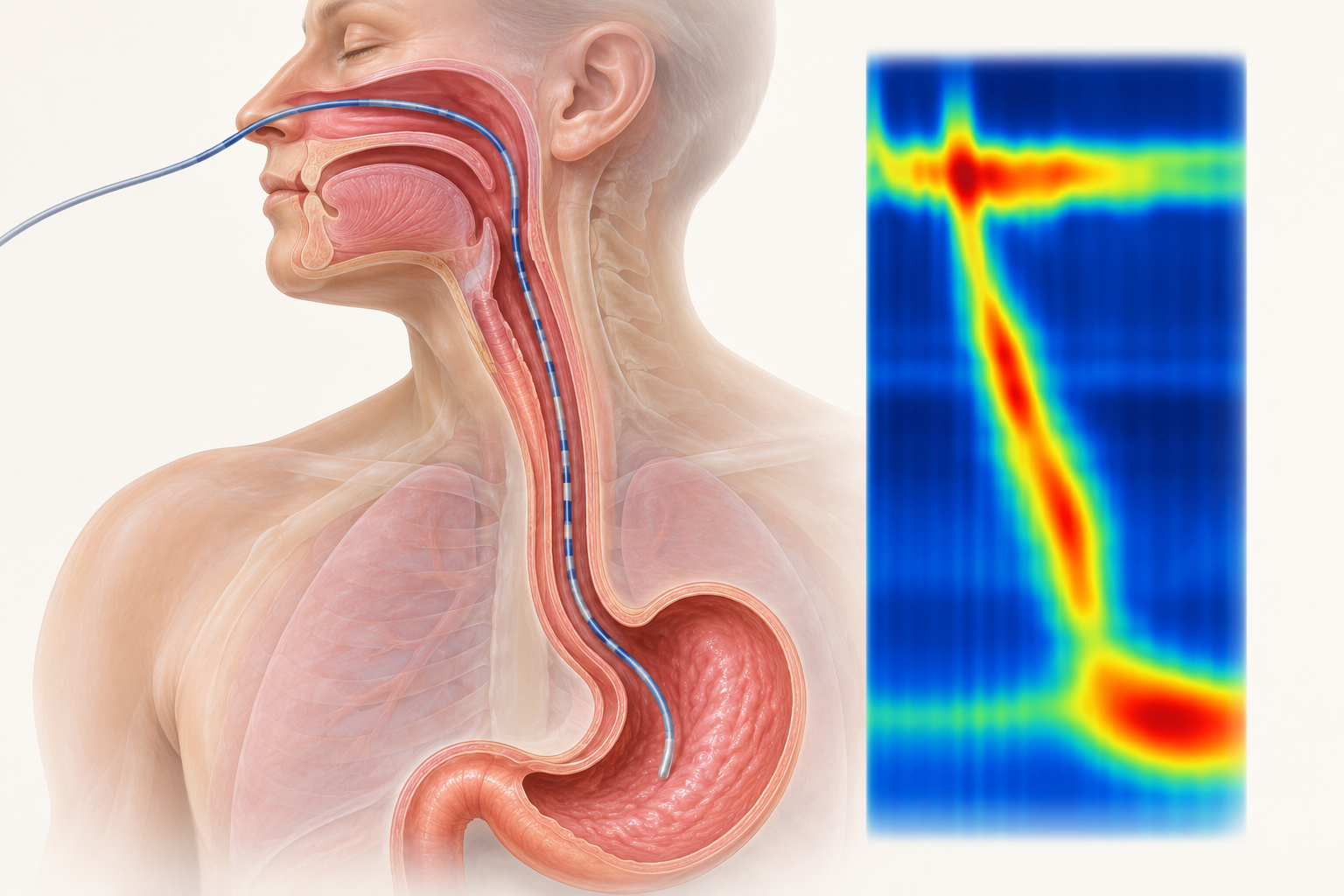
A thin, flexible tube containing pressure sensors is gently passed through the nose into the food pipe and stomach. Unlike endoscopy, HRM measures muscle function rather than taking camera images.
Why Might HRM Be Recommended?
Your gastroenterologist may recommend HRM to investigate swallowing problems or assess how the food pipe muscles and valves work.
The test may help with:
- Investigating difficulty swallowing when further assessment is needed.
- Diagnosing movement disorders such as achalasia or esophageal spasm.
- Assessing persistent chest pain after heart-related causes have been excluded.
- Checking food pipe function before certain anti-reflux procedures.
HRM does not directly measure acid reflux. A separate pH or impedance test may be recommended when needed.
How Is the Test Performed?
The test is usually performed while you are awake, without sedation, because you need to follow swallowing instructions. A local numbing spray or gel may be used to reduce discomfort.
A thin catheter is gently passed through one nostril into the food pipe and stomach. You will then be asked to take small sips of water and swallow at specific intervals while the sensors record pressure changes.
The catheter is removed once the measurements are complete. The recording usually takes around 20–30 minutes, although the full appointment may take longer.
How Should I Prepare?
Your treating team will provide preparation instructions based on your health and the planned test.
- Follow the fasting instructions provided before your appointment.
- Share your previous endoscopy, scan and swallowing-test reports.
- Tell the team about all medicines and supplements you take.
- Mention diabetes, medicine allergies, previous nose or food pipe surgery, and any severe swallowing difficulty.
- Ask whether any medicines need to be adjusted before the test.
Do not stop or change prescribed medicines unless your treating doctor advises you to do so.
What Happens After the Procedure?
Most patients can go home shortly after the test and return to their usual activities.
If numbing medicine was used, wait until its effects have worn off and follow the team’s advice before eating or drinking.
Your specialist will review the pressure recordings alongside your symptoms and previous investigations. The results will help guide further testing or treatment where appropriate.
What Are the Possible Risks?
HRM is generally well tolerated. Temporary side effects may include:
- Discomfort or gagging while the catheter is inserted.
- Watery eyes.
- A sore throat or nasal irritation.
- A minor nosebleed.
Occasionally, the catheter cannot be passed or the test cannot be completed because of discomfort. Serious complications, such as injury to the food pipe, are very rare.
Tell the team immediately if you experience significant discomfort during the test. Seek medical advice if you develop severe chest or abdominal pain, breathing difficulty or significant bleeding afterwards.
Dr. Lavkush Prasad Tiwari
MBBS, MD (INTERNAL MEDICINE), DM (MEDICAL GASTROENTEROLOGY)
SMR: MP12467
Click HereHow can we help you?
Contact us at the Gastro World & Liver Centre Rewa (MP) Or make an appointment online.