Cholangioscopy
Cholangioscopy in Rewa (MP)
What Is Cholangioscopy?
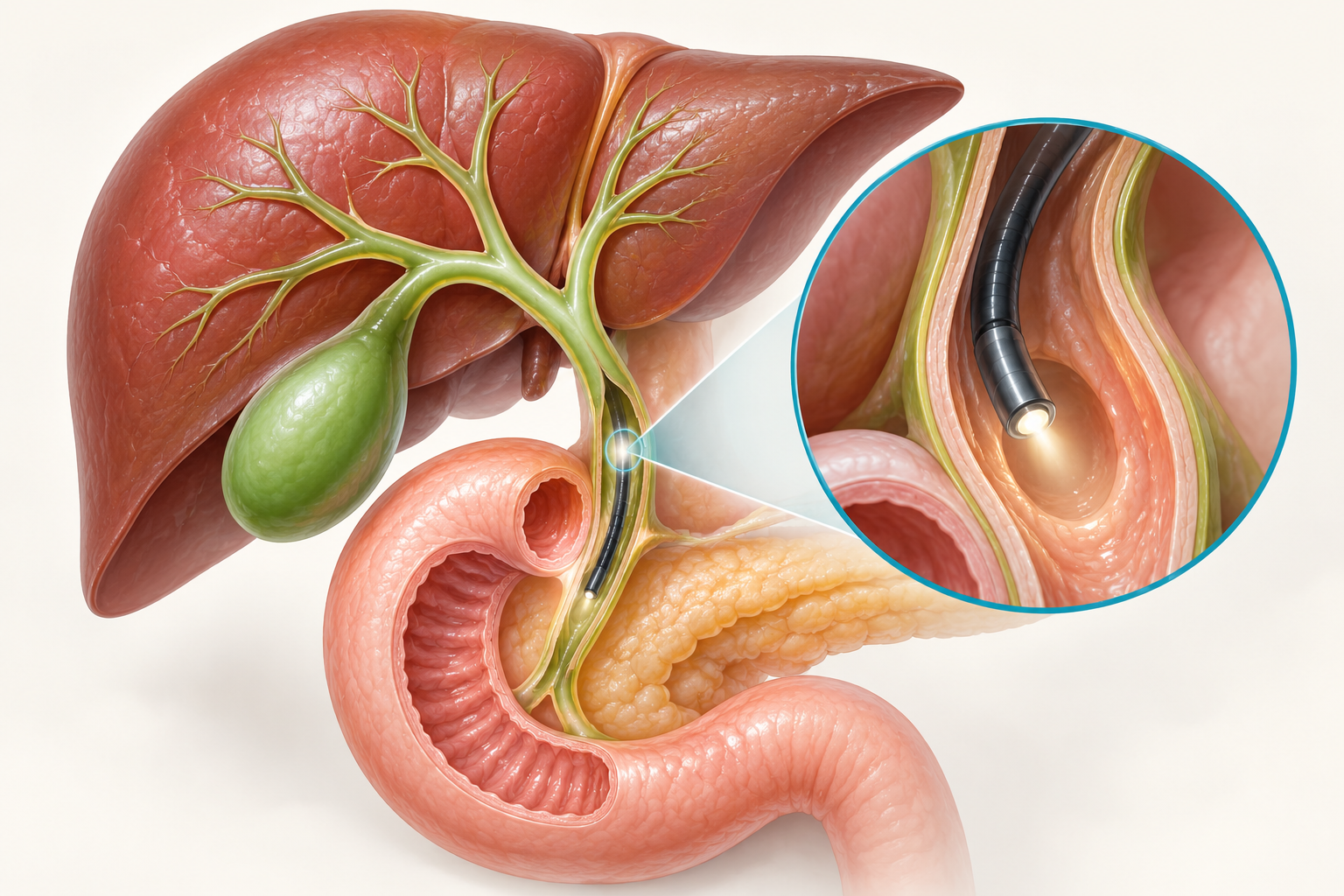
The procedure is usually performed during ERCP. It provides a closer view of selected bile duct problems and can help guide tissue sampling or treatment when needed.
Why Might Cholangioscopy Be Recommended?
Your gastroenterologist may recommend cholangioscopy when further examination of the bile ducts is needed, particularly when previous scans or tests have not provided a clear explanation.
It may be used to:
- Examine an unexplained narrowing of the bile duct.
- Take targeted tissue samples from a suspicious area.
- Assess difficult bile duct stones.
- Guide treatment for selected stones that cannot be removed using standard techniques.
The need for cholangioscopy depends on your symptoms, scan findings, previous treatment and overall health.
How Is Cholangioscopy Performed?
The procedure is generally carried out with sedation or anaesthesia, depending on your clinical needs.
A flexible endoscope is passed through the mouth into the upper part of the small intestine. A miniature scope is then guided into the bile duct to display detailed images on a monitor.
If required, small instruments may be used to collect tissue samples. In selected cases, specialised equipment can help break up difficult bile duct stones. The exact treatment depends on the findings and available facilities.
How Should I Prepare?
Your treating team will give you instructions suited to your procedure and medical history.
- Follow the fasting instructions provided by the team.
- Share your previous scans, blood tests and procedure reports.
- Tell the doctor about all medicines, supplements and allergies.
- Mention blood-thinning medicines, diabetes medicines and weight-loss injections.
- Inform the team if you are pregnant or could be pregnant.
- Arrange for a responsible adult to take you home if sedation is planned.
Do not stop or change prescribed medicines unless your treating doctor advises you to do so.
What Happens After the Procedure?
You will be monitored in a recovery area. Some patients can go home after observation, while others may need a hospital stay.
Temporary throat discomfort or bloating may occur. Your team will explain when you can eat, drink and return to your usual activities.
After sedation, follow the discharge instructions about driving, work and having someone stay with you. Tissue sample results, if taken, will be discussed at a follow-up appointment.
What Are the Possible Risks?
Cholangioscopy has risks similar to those associated with ERCP. These include:
- Pancreatitis, or inflammation of the pancreas.
- Infection of the bile ducts.
- Bleeding.
- A tear or perforation in the digestive tract or bile duct.
- Reactions or breathing problems related to sedation or anaesthesia.
Some complications can be serious and may require hospital treatment or additional procedures. Your doctor will explain your individual risks, expected benefits and alternatives before obtaining consent.
Seek urgent medical attention after the procedure if you develop severe or increasing abdominal pain, fever or chills, persistent vomiting, vomiting blood, black stools or breathing difficulty.
Â
Dr. Lavkush Prasad Tiwari
MBBS, MD (INTERNAL MEDICINE), DM (MEDICAL GASTROENTEROLOGY)
SMR: MP12467
Click HereHow can we help you?
Contact us at the Gastro World & Liver Centre Rewa (MP) Or make an appointment online.